





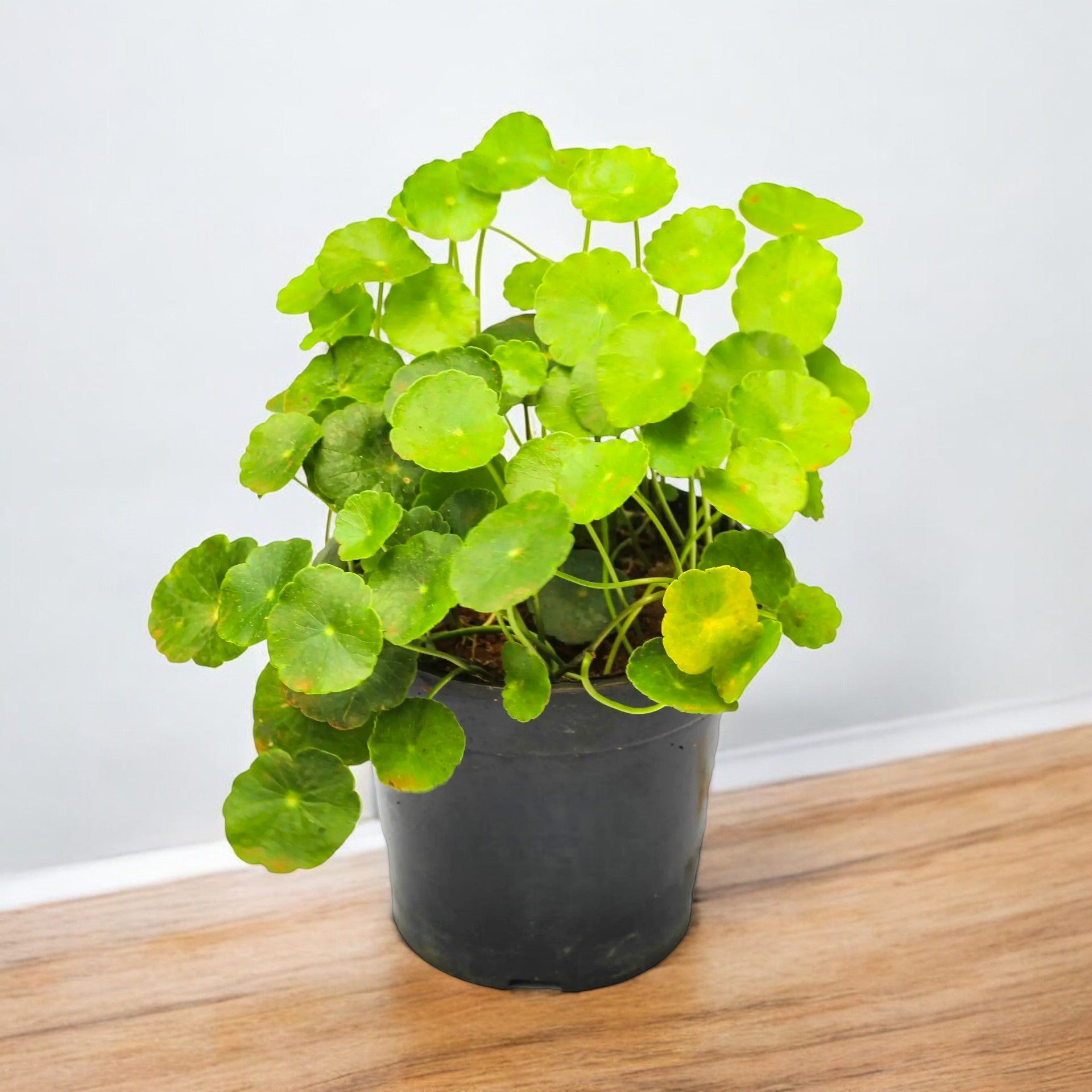


Brahmi Plant – Gotu Kola, Mandukaparni, Centella Asiatica
Basic Product Details
Scientific Name: Centella asiatica
Common Names: Brahmi, Gotu Kola, Mandukaparni, Indian Pennywort
Plant Height: 6-12 inches (approximately)
Pot Size: 4-6 inch nursery pot
Plant Type: Perennial, medicinal, creeping herb
Soil Type: Moist, loamy, well-draining soil with a slightly acidic to neutral pH
Sunlight Requirement: Partial shade to indirect sunlight
Product Overview
The Brahmi Plant (Centella Asiatica), also known as Gotu Kola or Mandukaparni, is a powerful Ayurvedic herb widely recognized for its brain-boosting, stress-relieving, and skin-healing properties. This creeping, perennial herb is commonly used in traditional medicine, herbal teas, and skincare formulations. It thrives in moist, tropical environments and is easy to grow both in pots and garden beds.
Features and Characteristics
Growth Habit
A low-growing, creeping herb with rounded green leaves.
Thrives in warm, humid climates with partial shade.
Leaves & Flowers
Bright green, fan-shaped leaves with a smooth texture.
Small pink or white flowers bloom in clusters.
Medicinal Properties
Memory and Cognitive Booster – Enhances brain function and concentration.
Natural Stress Reliever – Helps in anxiety and stress management.
Skin and Wound Healing – Used for acne, scars, and minor wounds.
Anti-Inflammatory – Beneficial for arthritis and joint pain relief.
Uses of Brahmi (Gotu Kola) Plant
Medicinal & Ayurvedic Benefits
Boosts Brain Function – Improves memory, focus, and cognitive health.
Supports Nervous System – Helps in anxiety, stress, and depression relief.
Aids Digestion – Helps in detoxification and digestion improvement.
Promotes Healthy Skin – Used in Ayurvedic treatments for acne, eczema, and scars.
Culinary Uses
Used in herbal teas and tonics for relaxation and memory enhancement.
Can be consumed fresh in salads or dried in herbal powders.
Used in green juices and Ayurvedic herbal supplements.
Harvesting and Farming Details
Farming
Climate Requirements
Thrives in tropical and subtropical climates.
Prefers warm, humid environments with indirect sunlight.
Soil
Grows well in moist, loamy, and well-draining soil.
Prefers slightly acidic to neutral soil conditions.
Planting Season
Best planted during spring or monsoon season.
Spacing
Maintain a 1-2 feet gap between plants to allow spreading.
Harvesting
Leaves can be harvested 2-3 months after planting.
Best harvested in the morning when essential oils are at their peak.
Can be dried and stored for long-term medicinal use.
Care Tips
Light
Prefers partial shade to full sunlight.
Avoid direct harsh sunlight, especially in summer.
Watering
Needs regular watering to keep the soil moist but not soggy.
Avoid overwatering to prevent root rot.
Fertilizer
Apply organic compost or liquid fertilizers every month.
Use mild organic fertilizers to enhance growth.
Pruning
Regular pruning helps maintain a healthy and bushy growth.
Remove dead or yellowing leaves for better plant health.
Pest Control
Generally resistant to pests, but may attract aphids or caterpillars.
Use neem oil spray or organic insecticides if needed.
Benefits of Growing Brahmi Plant
Health & Wellness Benefits
Fresh homegrown Brahmi ensures a chemical-free, organic herbal source.
Easy to grow and maintain for daily medicinal use.
Economic Benefits
Used in the herbal, pharmaceutical, and skincare industries.
Highly sought after for Ayurvedic and organic medicine production.
Environmental Benefits
Improves soil quality and enhances biodiversity.
Air-purifying plant that helps maintain a healthy indoor environment.
Placement Suggestions
Perfect for home gardens, terrace gardens, and herbal corners.
Can be grown in small pots, hanging baskets, or garden beds.
Suitable for indoor growing with indirect sunlight.
Common Questions & Answers About Brahmi Plant (Gotu Kola)
What is Brahmi Plant used for?
Brahmi is widely used for brain health, memory improvement, stress relief, and skin healing in Ayurveda and herbal medicine.
Can I eat Brahmi leaves directly?
Yes, Brahmi leaves can be chewed fresh, added to salads, or blended into herbal juices.
How long does it take for Brahmi to grow?
Brahmi grows quickly and can be harvested within 2-3 months after planting.
Does Brahmi require full sunlight?
Brahmi prefers partial shade to indirect sunlight but can tolerate some direct sun.
How often should I water my Brahmi plant?
Water regularly to keep the soil moist, but avoid overwatering.
Can Brahmi be grown indoors?
Yes, it can be grown indoors in pots with good humidity and indirect light.
What is the best way to use Brahmi for brain health?
Brahmi is commonly consumed as tea, fresh leaves, or in powdered form for brain and nervous system benefits.
Is Brahmi good for hair growth?
Yes, Brahmi is known to nourish the scalp, reduce dandruff, and promote hair growth.
Can Brahmi be used for skin problems?
Yes, Brahmi has anti-inflammatory and healing properties, making it effective for acne, scars, and minor wounds.
How do I protect my Brahmi plant from pests?
Brahmi is generally pest-resistant, but if needed, use organic neem oil spray for pest control.
The Brahmi Plant (Gotu Kola, Centella Asiatica) is a must-have for anyone looking to grow a powerful medicinal herb with multiple health benefits. Whether for brain health, skincare, or Ayurveda, this easy-to-grow herb is perfect for home gardens. Order now and enjoy the benefits of fresh, organic Brahmi!
All Categories


Reviews
Clear filtersThere are no reviews yet.